
BMI Calculator
BMI Reference Table (Adults)
| Category | BMI Range (kg/m²) | Health Risk |
|---|---|---|
| Severe Underweight | < 16 | Severe risk |
| Moderate Underweight | 16 – 17 | Moderate risk |
| Mild Underweight | 17 – 18.5 | Mild risk |
| Normal | 18.5 – 25 | Minimal risk |
| Overweight | 25 – 30 | Increased risk |
| Obese Class I | 30 – 35 | High risk |
| Obese Class II | 35 – 40 | Very high risk |
| Obese Class III | > 40 | Extremely high risk |
Body Mass Index (BMI)
Body Mass Index (BMI) is a very commonly used method to ascertain whether the body weight of a person is healthy in relation to their height. This is measured by physicians, fitness practitioners and health organizations to determine categories like underweight, healthy weight, overweight, or obese. Though BMI cannot measure body fat percentage directly, it serves as a preliminary measure that enables to detect probable health hazards related to one's weight.
What is BMI?
Body Mass Index is an arithmetical computation where the weight of the person is compared with their height. This method is widely recognized as it is economical, uncomplicated and simple to derive. BMI could indicate the possibility of developing certain diseases due to unhealthy weight, either too little or too much, of the body.
In general, being within the healthy BMI is positively linked with having reduced risks for medical conditions like high blood pressure, heart ailments, diabetes and few other metabolic disorders. However, it should not be viewed as a definitive measure for one's health as the level of muscularity, age and sex also play a significant role in determining health risks along with the BMI.
Body Mass Index Chart
This chart helps in categorizing body weight. A doctor uses this chart to evaluate whether the BMI falls in the ideal range or not.
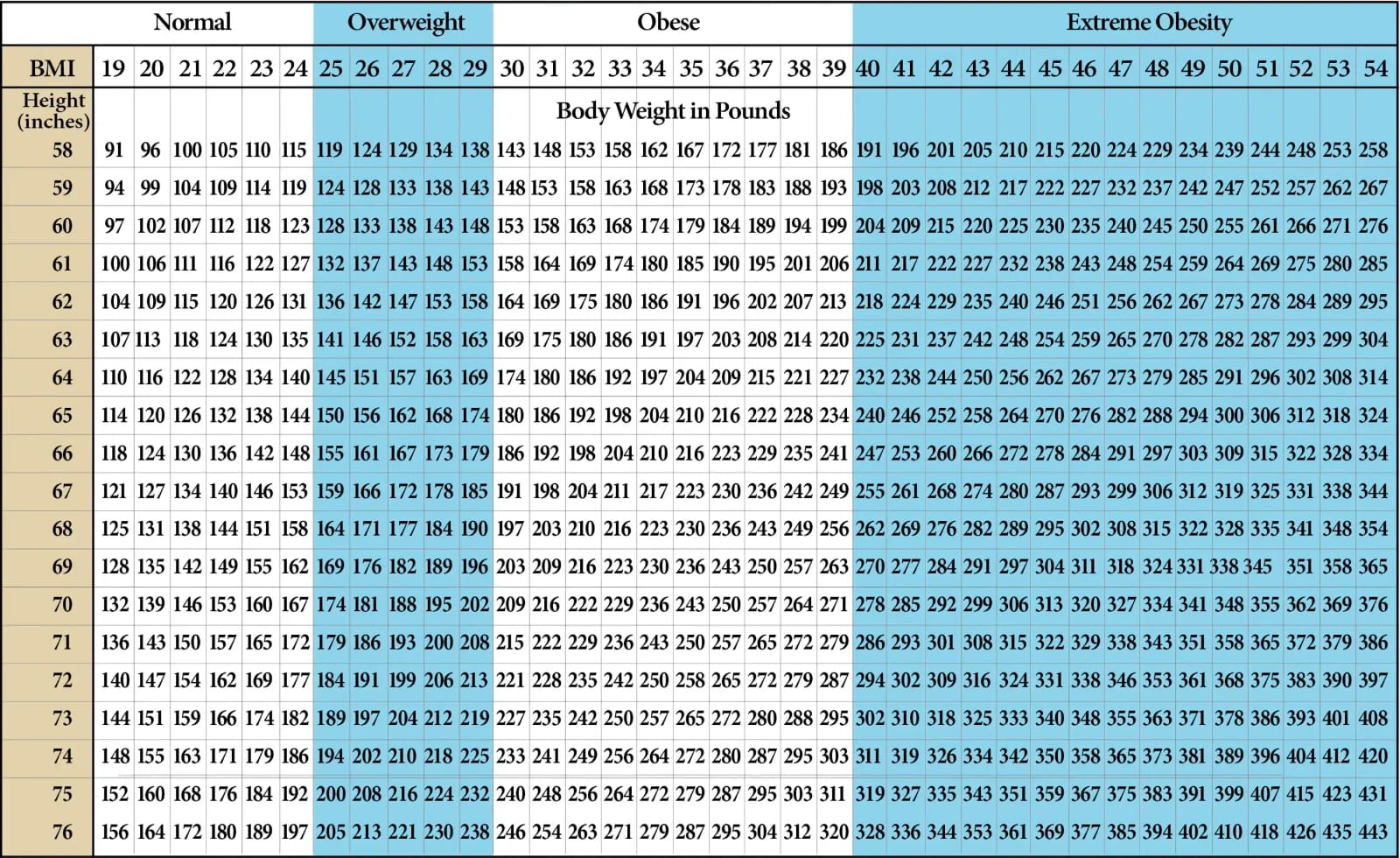
As per this standard chart, underweight people fall under a BMI less than 18.5 whereas an optimal BMI is between 18.5 and 24.9. Overweight is noted at a BMI of 25 to 29.9 and obesity is identified by a BMI equal to or above 30. Though effective in finding out if one is underweight or overweight, the BMI chart is not applicable for athletic and aging people nor to infants, since body composition varies significantly with age and lifestyle.
Formula for calculating BMI
There are two commonly used formulas that help calculate BMI using both the imperial and the metric systems.
Metric System Formula
70 kg and 1.75 m:
BMI=70/(1.75)2 =22.9
Imperial System Formula
154 lbs and 69 in:
BMI=(154*703)/(69)2=22.7
These two methods will provide similar results when health risks are to be assessed by the physician.
BMI Classification (Adults, WHO 2020)
According to the World Health Organization's classifications:
BMI Range Classification
Below 18.5 Underweight
18.5 - 24.9 Normal weight
25.0 - 29.9 Overweight
30.0 - 34.9 Obesity Class I
35.0 - 39.9 Obesity Class II
40 or above Obesity Class III
Though these categories were developed by WHO to determine risks associated with health problems, many physicians still prefer to assess a person's BMI with considering age, ethnicity, sex and other health problems.
Body Mass Index (BMI) for Children
The calculation of BMI is different in children and teenagers when contrasted with adults because it depends on age and sex as well as height. A child aged between 2 to 19 years will require his BMI to be compared with the specific percentiles determined based on sex and age from standardized children's growth charts. These kids will have percentile-based health categories as stated below:
Healthy weight: 5th to below 85th percentile
Overweight: 85th to below 95th percentile
Obese: equal to or above 95th percentile
This method helps the pediatrician to monitor growth rate of the child and if required, provide necessary advice related to diet and other habits. Like adults, a child's health should be evaluated along with other parameters of the health of the child such as physical condition, diet and family history.
Limitations of body mass index to evaluate health status
Despite being useful for many health assessments, Body Mass Index (BMI) is not an ideal measure for detecting the overall health condition of an individual. BMI has its drawbacks because it does not distinguish between muscle mass and body fat. Athletes with developed muscles have a high BMI due to the presence of muscles but low fat in their body. It is a possible risk for anyone to have normal BMI levels yet pose significant risks of developing some chronic disease or medical condition because obesity depends on fat percentage as well as where that fat is located within the body. This also implies that a low BMI value might be observed even for a person having high body fat if that individual possesses a low percentage of muscle. Thus, BMI alone does not determine whether an individual is either healthy or overweight.
What are the limitations of Body Mass Index(BMI)?
Furthermore, BMI cannot reflect an individual's overall health as it does not incorporate the person's lifestyle and eating habits. If you have a healthy weight yet eat unhealthy food and are not fit for physical activity or if you smoke and drink, your body is at high risk of developing chronic illnesses despite being at a normal BMI. Hence, a BMI measurement is incomplete without incorporating other factors such as, cholesterol levels, blood pressure etc. For determining an accurate health assessment. Additionally, it cannot effectively measure a child or pregnant woman's weight because such measurements cannot be accurately taken based on the standard charts. This method might not even work well with older adults or body builders. This shows the various limitations that exist when relying solely on BMI for health assessment.
Clinical Significance of BMI
It is significant because doctors can determine how healthy someone is and assess how it affects the health of their heart as high BMI are very common amongst those with high blood pressure, sleep apnea, type 2 diabetes and few other health problems and low BMIs can be linked to anorexia and anemia. It is used in hospital as a diagnostic method that can help determine various risks faced by many individuals and hence used for monitoring patients' weight which helps them keep a check of diseases like hypertension and diabetes. With regular check-ups, it helps patients achieve a healthy range for their BMI and ensures good and active lifestyle and diet plans.
Conclusion
In short, Body Mass Index (BMI) continues to be an indispensable yet basic measure that compares body weight to height to estimate likely health risks. Though it cannot provide a holistic view of the wellness of an individual and should not be used solely as an indicator, it remains a fundamental instrument in numerous clinical settings, in guiding people towards a healthier way of living, and in monitoring public health for the development of certain diseases that are directly related to obesity and weight gained over the years. By incorporating BMI results into personalized health strategies which include appropriate food choices and exercise, people can develop the best possible methods to take care of themselves in the long term.